
Camouflage
From Warhol to Wu-Tang, Stone Island to Louis Vuitton. How camouflage went from military utility to one of fashion's most enduring statements.
A recent trip to Cape Town found me sitting (or sat, if you are Steven Bartlett) in a hotel reception area, across from a man from the USA. He immediately got into his life story and I may now know more about him than many of my closest friends. I saw photos of his kids and grandkids, photos of where he lives, and photos of his many hunting holidays and expeditions. It turned out, the reason for his presence in South Africa was to remove some of its life, in exchange, I guess, for some of the Dead Presidents.
He was a lovely man. He really was. A family man, raised in the middle of the United States. Whatever you may feel about hunting, let's not go there for the purpose of this piece.
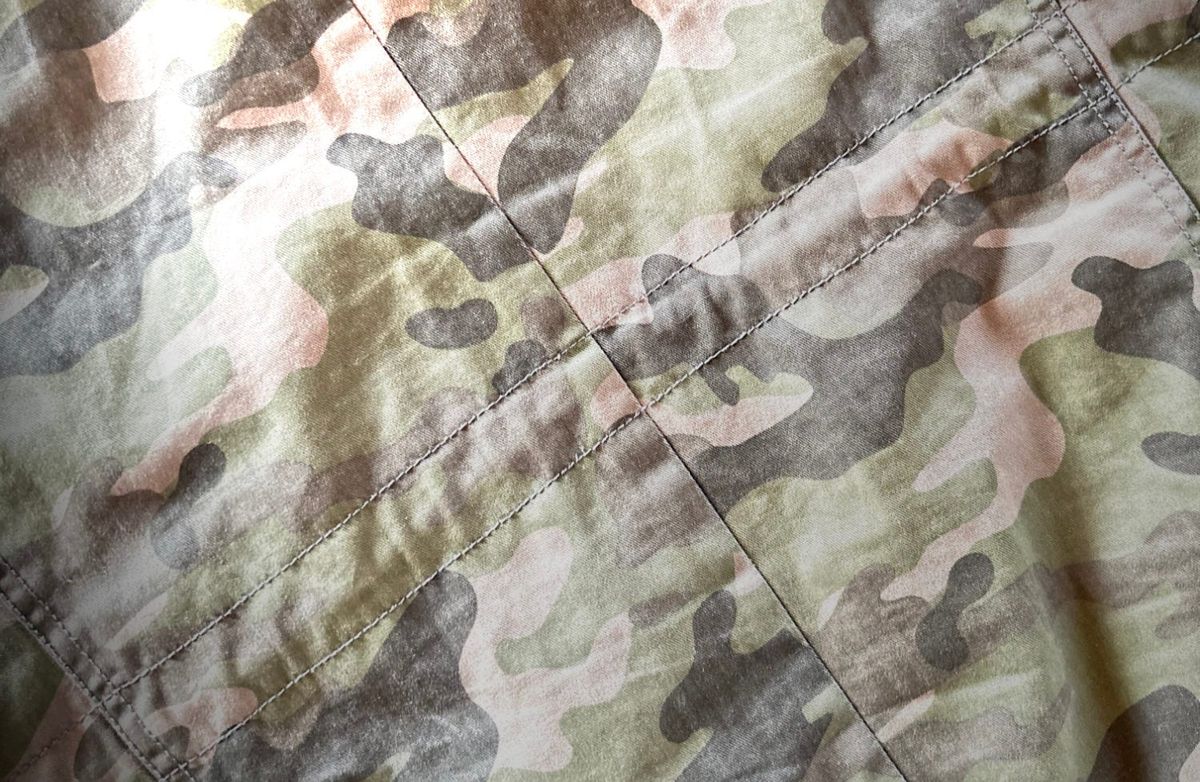
We chatted for a long time. Or rather, perhaps, I sat through a long and informative monologue. One thing about that time with him has stuck with me. See, I was wearing a camo jacket that day. An old-ish, collared, military-style jacket with a bunch of pockets. I wear it because I think it looks cool. Like in streetwear cool. But The Hunter saw it as, I'm not sure, a connection to the world of guns, maybe.
Camouflage has its history in actual warfare, and there are many articles to read about how it came to be a streetwear or street culture icon. From Andy Warhol to Wu-Tang, from Maharishi to Nigo, Stone Island to Gaultier. Army surplus stores provided easy access to the real stuff. Now thrifting provides easy access to the brands and designers.
So, when I put the jacket on that day, I was doing so because, a) it was cold in Cape Town, and b) the entire world of streetwear history led to the point that I owned a camo jacket. Not because I have ever had the need to be hidden in order to avoid being killed, or to kill an innocent animal.
During my time with The Hunter, I said something like, "Oh no, I just wear it for fashion." Like I had to apologise. Here's me, being cool. And there's him, being utilitarian. Two people, seeing things differently. But getting on nonetheless. He explained some famous camo patterns. From woodland to digital, the Vietnam War to Operation Desert Storm. I was going to start explaining Pharrell's pixelated Damoflage for Louis Vuitton, but bit my tongue.
It's important to know and understand the cultural reason you might wear something. Like, don't wear the band t-shirt unless you bought it at the concert, or are a fervent fan. Likewise, don't wear camo unless you're ready to grab a gun and take out some fauna. Or, rather, go for it, wear the camo for fashion, and don't apologise.
Let's clink our glasses for camouflage. The pattern that extends across boundaries – boundaries of time, place, culture, war, peace.
As we parted ways, The Hunter gave me his card and invited me on a hunting trip to Texas, USA.
What would you do?

Comments ()